


Players in Hytale that enjoy crafting and alchemy need to understand the role of glass bottles for their gameplay experience. You can only craft glass bottles from a certain type of sand (there are two types of sand in the game, sand and sandstones). This article will explain how to create and use glass bottles in the game.
Identifying Real Sand vs Sandstone
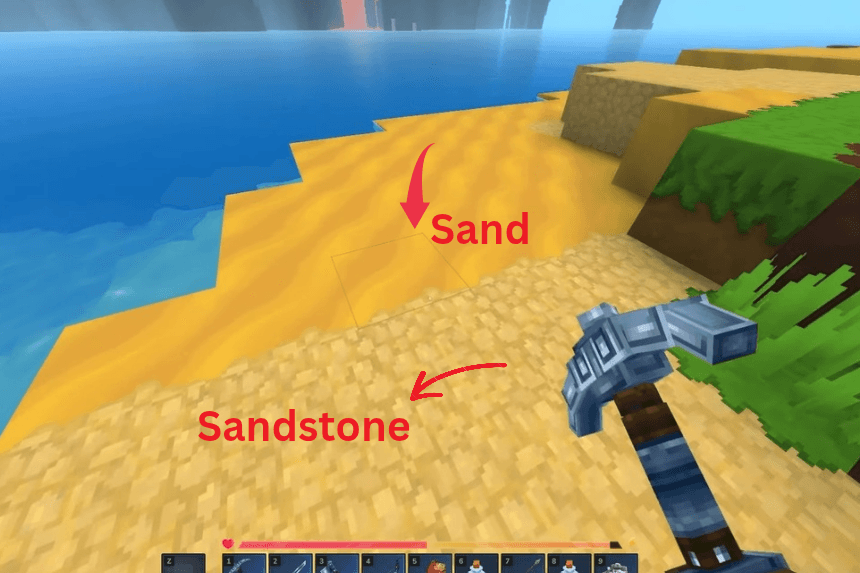
There are many similarities between the appearance of sandstones and sands, making it easy to confuse the two in the game. However, when viewed up close, you will quickly see the differences between the two items. The dull appearance of sandstone is indicative of the material’s solid nature. In contrast, sand is much brighter than sandstone, and like all sandy soils, it is often associated with beach biomes in the game.

In addition to the difference in colours, you will notice that the texture of sand is soft and sandy, while the texture of sandstone is extremely solid with a look similar to a rock. If you want to create glass bottles using sand, be sure you use actual sand when mining!
How to Make Glass Bottles

Once you’ve obtained the sand, it will need to be melted in a furnace to create glass bottles that can be used to store potions throughout the gameplay. Currently, sand has no specific function when placed on the builder workbench, nor will there be any new crafting recipes available when you place sand there.
Making Windows
Windows can be crafted from wooden logs rather than using glass bottles or sand (as indicated by the absence of a glass block option for creating windows in this game).
To use wooden logs to craft windows, simply place wooden logs in your builder’s workbench and you will see a wooden window option available as one of the crafting options.
Using Glass Bottles
To create and use glass bottles for alchemy purposes, one must construct an alchemist’s workbench, which will allow you to use glass bottles to make various types of elixirs and potions. In addition to providing antidotes for poisoning, the workbench will also create potions of all other types produced by the workbench itself.