

Time is money in The Alters. Resources deplete rapidly, environmental catastrophes strike out of nowhere, and if you don’t prepare properly, things can get out of hand rapidly. Fortunately, the game does have an easy but efficient automation system that can assist you with taking the pressure off—you’ll simply need to find out how to do it.
Many players miss this aspect at the beginning because it’s not clearly described until later. But if you do take the time to learn it from the beginning, you’ll avoid a lot of desperate fumbling when you’re out of things like food, filters, and repair kits.
Understanding the “Hold” System
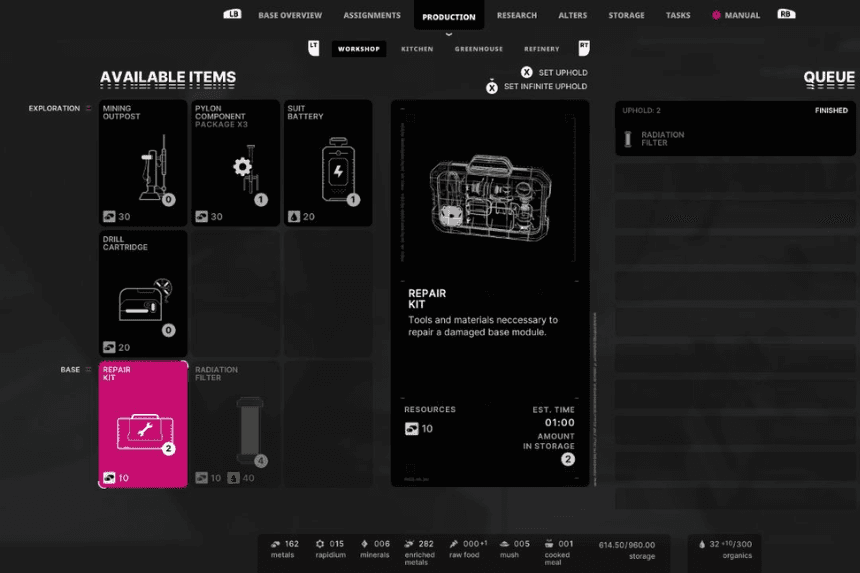
The “hold” system is your foundation for mass-producing simple items. It allows you to produce a minimum amount of crucial items such as:
- Mush (food)
- Radiation Filters
- Repair Kits
- Batteries
- Crafting materials
Instead of making items yourself whenever you need them, you can enter the corresponding facility (like the kitchen or workshop) and activate the button labeled “Hold.” This allows you to make a specified number of items that can always be accessed.
For example, setting a hold value of 3 on Radiation Filters is in a way such that the game will try to have a minimum of 3 filters in your stockpiles at all times. It does not produce them automatically as default—but then there is Alters.
Setting Alters to Maintain Production
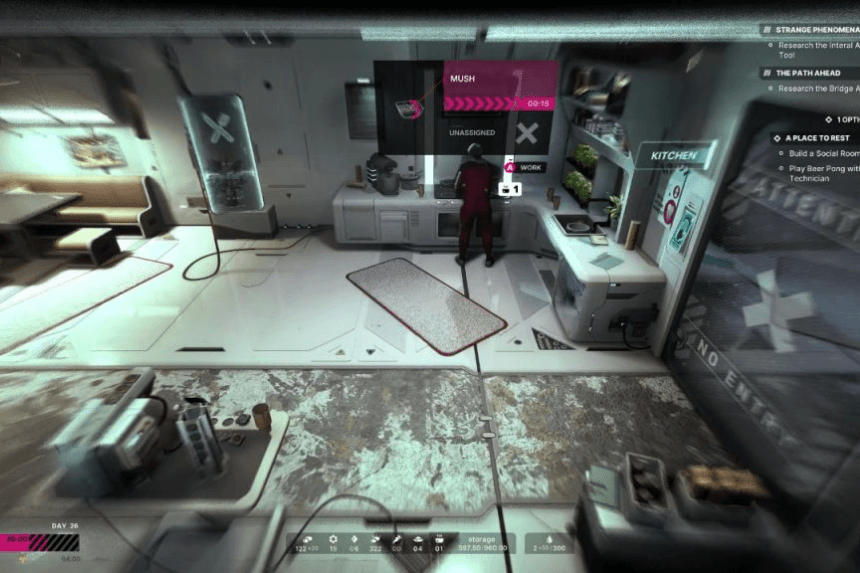
Once you have set up your hold values, you will need to direct production tasks to your Alters. Go into the management menu and direct an Alter to the respective room—kitchen, workshop, or garden. That Alter will monitor stock levels and begin crafting whenever item levels drop below your set threshold.
A note should be taken that Alters are not robots. They must still be checked in regards to workload, rest cycles, and tasks. If you can route an Alter to an outpost or other facility zone, they will not maintain production on the floor they departed from—so keep an eye on your tasks.
Still, if you keep your facilities in the middle and don’t over-tax your Alters with too many spinning activities, this system is great. Frequently, Alters will even notify you when your critical supplies are low, and you can act accordingly.
Tips for Efficient Automation
- Set sensible hold values: In early game, 2–3 of each critical item (kits, filters, food) should be enough. As your base grows, step those figures up.
- Assign the experts: Some Alters have skills or personalities that suit them most for specific jobs. Make use.
- Focus facilities close to one another: Proximity cuts down travel time, and your Alters can operate more efficiently.
- Don’t forget to evolve: Your needs will change as the story grows. Check your hold values and tasks regularly.
- You can scale: Need someone constantly constructing batteries or filters? Give them a high hold value (like 10+) and leave that Alter in the room. They’ll operate day and night until that level is met—and start over again when levels are low.
Why This System Matters
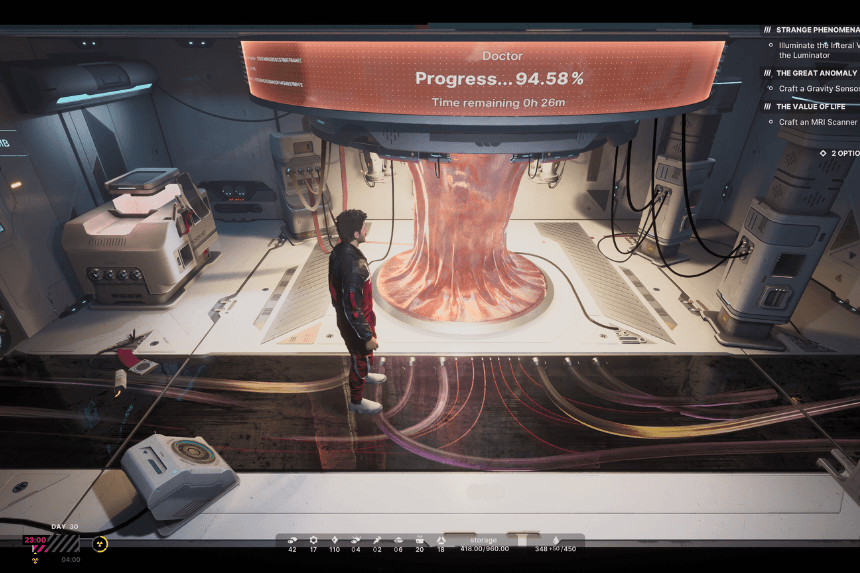
Without automation, The Alters become a juggling routine of writing and crisis control. With it, you set up a rhythm of repetition that lets you focus your mind on exploration, upgrades, and decision-making. The hold system and job assignment won’t eliminate micromanagement entirely, but they reduce the stress—and in a game as stressful as this one, that’s a tremendous win.
Master this configuration first. Not only will your base be more effective—it might just save your life during the next Magnetic Storm.